

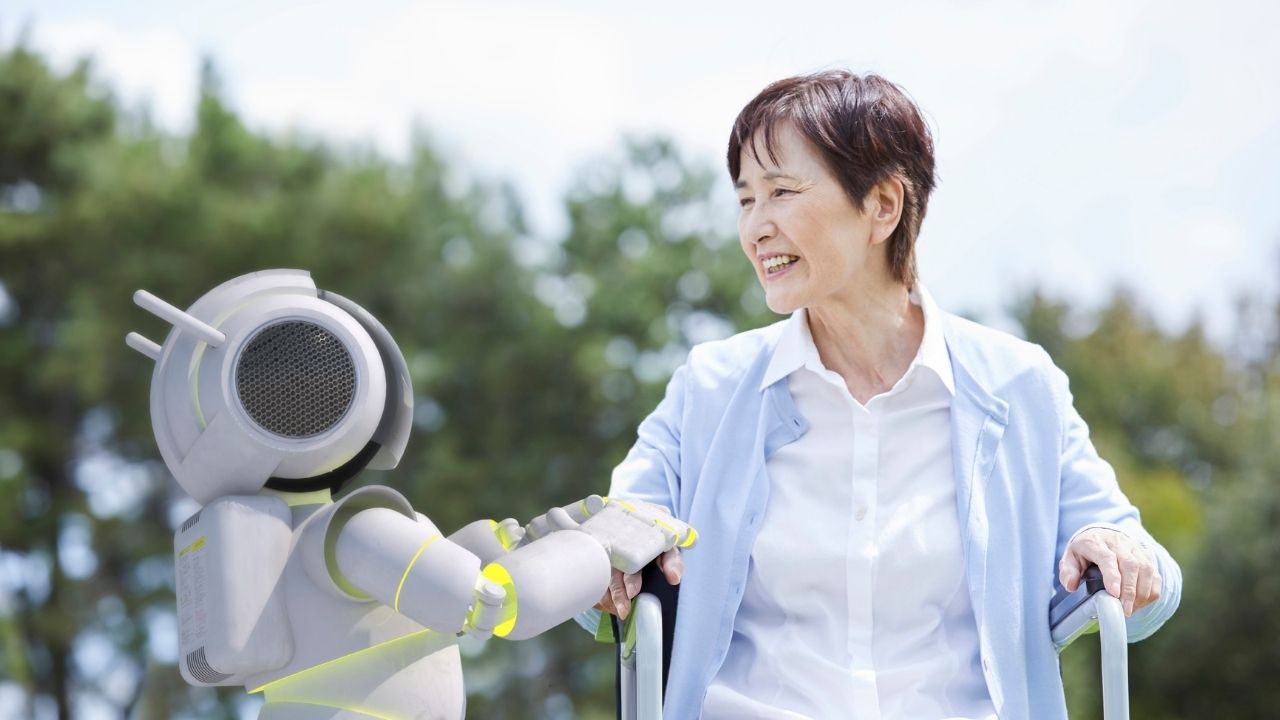
Japan faces one of the biggest demographic challenges of the century XXIThe rapid aging of its population and the progressive reduction of its workforce. The combination of low birth rates, high life expectancy, and an increasingly aging population is profoundly transforming the country's economic and social structure. Because of this, robotics and automation have become key elements in addressing the labor shortage, improving productivity, and ensuring the operation of essential services.
As one of the world's leading technological powers, Japan seeks to leverage its leadership in industrial robotics to extend automation to sectors such as logistics, agriculture, services, and especially elder care. However, the integration of robots also raises questions about their true capacity to replace human labor, their implementation costs, and their social implications.
1. Demographic aging
The aging population represents one of the main challenges for the Japanese economy. As of September of this year, the country had approximately 36,24 million people over the age of 65, representing 29,6% of the total population—the highest percentage in its history. Furthermore, the Japanese population is projected to reach approximately 123,05 million by 2025, a decrease of roughly 3,1 million compared to 2020.
This demographic shift is primarily due to two factors: declining birth rates and increased longevity. On the one hand, Japan is experiencing a shrinking working-age population, while simultaneously facing a growing demand for healthcare, social services, and social protection. On the other hand, the reduced labor force makes it difficult to recruit in numerous sectors and limits the productive capacity of certain companies, among other things. Furthermore, an aging population can alter consumption patterns and reduce the dynamism of some domestic markets.
However, aging does not necessarily imply a reduction in economic activity. Increased female labor force participation, longer working lives, and the influx of foreign workers can help mitigate its effects. In fact, in 2026 Japan reached a record 9,43 million workers over the age of 65, representing 13,8% of total employment.
Even so, these measures may not be enough to fully offset demographic changes. Therefore, the Japanese government has placed increased productivity and the adoption of new technologies among its economic priorities.
Comparative table: median age of the population (2025)
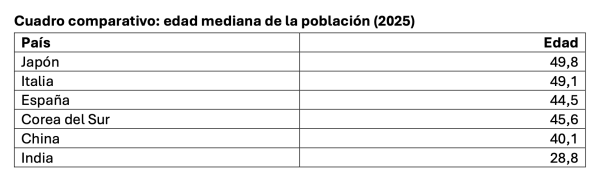
Japan's aging population is particularly striking when compared to other major economies in Europe and Asia. In 2025, the median age of the Japanese population was projected to be 49,8 years, higher than that of Spain (44,5) and similar to that of Italy (49,1), the highest in the entire European Union. In Asia, South Korea (45,6) and China (40,1) also exhibit progressively aging populations. In contrast, the difference is notable compared to India, whose median age was just 28,8 years, making it 21 years younger than Japan's.
This comparison demonstrates that Japan is not the only country facing challenges related to demographic aging, but rather a trend shared by various economies in Europe and Asia. However, while Japan, Italy, and Spain grapple with the consequences of an aging population, India boasts a much younger population, with greater potential for incorporating workers into the labor market. In this context, Japan's experience in robotics and automation could serve as a benchmark for other economies seeking to offset the decline in their working-age population and maintain their competitiveness.
2. A world power in robotics and automation
Japan has a long history in the development and manufacture of industrial robots. Companies such as FANUC, Yaskawa Electric, and Kawasaki Robotics have helped to consolidate a highly specialized technology industry linked to the automotive, electronics, and manufacturing sectors.
Japan was the world's second-largest market for industrial robots in 2024, after China. Approximately 44.500 new units were installed that year, while the total number of industrial robots in use reached 450.500, a 3% increase over the previous year. These figures reflect the importance of automation, where robots perform tasks such as assembly, welding, material handling, and process control. Their use allows for increased precision, improved production, and reduced reliance on certain manual tasks.
However, robotics continues to evolve. Currently, Japan is seeking to extend these technologies to less automated activities, particularly those affected by labor shortages. This transition is integrated into government initiatives such as Society 5.0, a societal model that aims to integrate digital technologies and the physical world to address economic and social challenges. Furthermore, Japanese economic policies have reinforced the use of artificial intelligence and digital technologies as tools to improve productivity and address labor shortages.
3. Automation as a response to the labor shortage
One of the main objectives of automation in Japan is to maintain companies' productive capacity despite the reduction in available workers. Unlike in other places, where robotization is often associated with the replacement of people, in Japan its expansion is due to the need to fill positions for which it is increasingly difficult to find staff.
In the industrial sector, robots allow for maintaining high production levels by automating repetitive tasks. In logistics, they can facilitate the sorting, storage, and transport of goods, while in agriculture they offer alternatives to address the aging of farmers and the lack of successors from new generations. Their use is also expanding into the service sector. Some Japanese hotels and retail establishments have incorporated robots for reception, security, cleaning, and product distribution. In the restaurant industry, mobile robots can transport dishes and reduce some of the staff's workload.
From an economic perspective, the main contribution of these technologies lies in increased labor productivity—that is, producing more goods and services with less human labor. This increased efficiency can help offset the shortage of skilled workers and improve the international competitiveness of Japanese companies.
4. An alternative for the care of the elderly
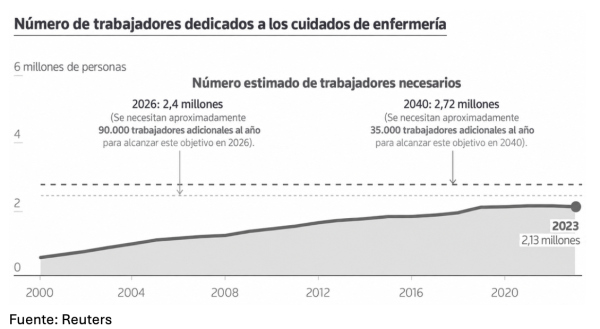
One of the areas where Japanese robotics presents the greatest opportunities, but also challenges, is elderly care. The aging population is increasing the demand for social and healthcare services in a context of shortages of specialized professionals.
Japan will need approximately 2,72 million workers in the care sector by 2040. This need has prompted the government to promote salary increases, facilitate the recruitment of foreign professionals, and introduce technologies aimed at reducing the workload of staff. To this end, Japan is developing different categories of robots and technological devices. Some help move patients, reducing the physical effort required of caregivers. Others allow for monitoring residents' rest, detecting risk situations, or supporting daily activities.
Among the best-known examples is PARO, a therapeutic robot resembling a baby seal, designed to have a calming effect and elicit emotional responses in patients. Unlike industrial robots, its purpose is not to replace a productive task, but to complement wellness and care activities.
Another noteworthy project is AIREC, a humanoid robot developed by researchers at Waseda University. This prototype, equipped with artificial intelligence, aims to perform tasks such as assisting patients in getting up, changing their position, or providing assistance with household chores. However, its development is still in an experimental phase, and it is not expected to be available on the market until 2030.
Despite these advances, the application of assistive robotics faces significant limitations. Physical contact with vulnerable individuals demands high safety standards, while patients' emotional and social needs require capabilities that are difficult to replicate technologically. Furthermore, the cost of the most advanced devices can hinder their large-scale implementation.
5. Can robotics foster Japanese economic growth?
First, increased productivity can partially offset the reduction in the workforce. If companies manage to increase output per employee through automated technologies, the economy could maintain a significant portion of its productive capacity even with a smaller workforce.
Secondly, the expansion of robotics can stimulate new economic activities related to research, equipment manufacturing, artificial intelligence development, and technological services. In addition to meeting domestic needs, these industries can strengthen Japan's export competitiveness in the face of aging populations in other developed economies.
Furthermore, economic growth depends on factors beyond the availability of workers. The evolution of domestic consumption, business investment, innovation, and international demand, among others, also influence a country's economic performance. Therefore, it is essential to distinguish between total GDP growth and GDP per capita. While demographic decline limits overall economic growth, increased productivity can sustain and improve quality of life and income per person.
6 conclusion
Japan is an example of how demographic aging can become a major driver of technological innovation. Faced with a shrinking working-age population, Japan is investing in robotics and automation to increase productivity, maintain its industrial competitiveness, and meet growing healthcare needs.
However, it also highlights the limitations of technology. While robots can take on certain functions and facilitate the work of caregivers, they cannot single-handedly resolve demographic instability or completely replace the human relationships that many services require. Their effectiveness will depend on their integration with labor, social, and economic policies.
Japan can serve as a benchmark for other economies facing similar aging challenges, such as South Korea, China, or other European countries like Spain. Its experience will allow for an assessment of the extent to which automation can transform a demographic crisis into an opportunity to build a more productive and sustainable economic model.