

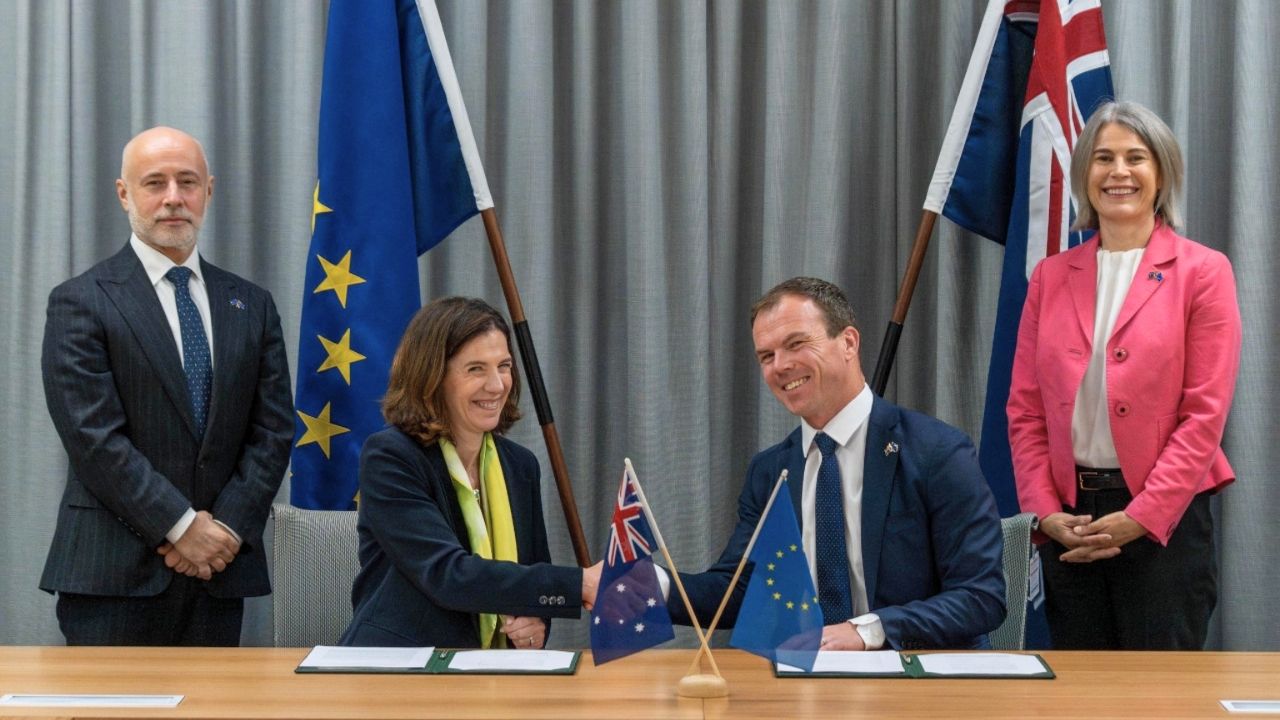
On June 9, the European Commission and Australia reached an agreement for Australia to join Horizon Europe. This agreement represents a vital moment for the program's international expansion.
What is Horizon Europe?
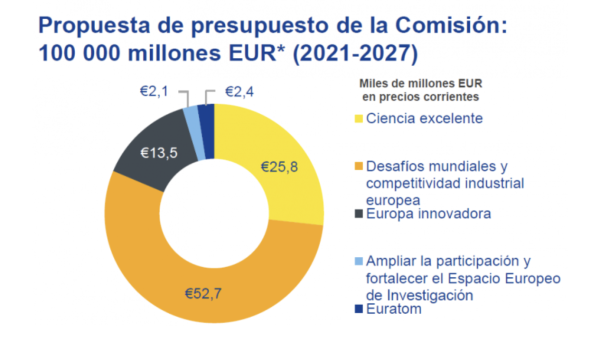
In mid-2018, the European Commission presented the initial proposal for Horizon Europe as the successor to the Horizon 2020 program. Subsequently, at the end of 2020, the European Parliament and the Council of the European Union reached an agreement on the program's structure and funding. Finally, the program came into effect at the beginning of 2021, with a duration until 2027. The program's budget is approximately €95,5 billion. This makes it the largest research and innovation program in the EU and one of the most important in the world.
Horizon Europe aims to address issues such as climate change, health, and agriculture, among others, thereby helping to achieve the United Nations Sustainable Development Goals and, in turn, boosting EU growth and competitiveness. The program is open to participation from countries worldwide, thus facilitating the creation and dissemination of knowledge and
technologies. In this way, the development of the EU is addressed simultaneously with the resolution of challenges at a global level.
To achieve its objectives, the Program is structured around three fundamental pillars:
• Pillar 1, Excellent Science, funds research projects through the European Research Council (ERC) focused on discovering and expanding new fields of study, led by researchers. It also invests in improving access to world-class research infrastructure. It has a budget of approximately €25 billion.
Pillar 2, Global Challenges and European Industrial Competitiveness, the largest pillar, focuses on funding research aimed at global and social challenges, with six specific themes: Health; Culture, Creativity and Inclusive Society; Civil Security for Society; Digital World, Industry and Space; Climate, Energy and Mobility; and Food, Bioeconomy, Natural Resources, Agriculture and Environment. It has a budget of approximately €53 billion.
Pillar 3, Innovative Europe, aims to position Europe as a pioneering power in market-creating innovation and the growth of innovative SMEs through the European Innovation Council (EIC). Furthermore, the European Institute of Innovation and Technology (EIT) fosters the integration of research, higher education, and entrepreneurship. It has a budget of approximately €13 billion.
These three pillars are supported by a cross-cutting area dedicated to broadening participation and strengthening the European Research Area. It has a budget of approximately €3,4 billion.
Looking ahead, on July 16, 2025, the European Commission presented its Programme MarHorizon Europe for the period 2028 to 2034, expanding its budget to €175 billion compared to the current program. This aims to position Europe as a world leader in strategic fields, driving progress in areas such as clean aviation, the space economy, and next-generation artificial intelligence.
Australia's role
From 1 January 2027, Australia will partner with Pilar II, participating, as mentioned above, in programs related to global challenges and European industrial competitiveness. To date, Australia has already participated in various projects, totaling 239 projects in which it has collaborated with Horizon Europe. This large number of participations positioned Australia as one of the program's major partners. Highlighting the caliber and exceptional quality of its research ecosystem, almost one in four individual applications from Australia is selected to participate in the program, resulting in an impressive success rate of 24,39%.
A significant example of a joint project between Australia and Horizon Europe is the Square Kilometre Array, the world's largest radio telescope currently under construction. Construction began in 2022 and is scheduled for completion in 2028. The telescopes are being positioned in South Africa and Australia. The project aims to observe the first stars and galaxies after the Big Bang; detect gravitational waves from pulsars and black holes; and ultimately, search for traces of extraterrestrial life.
Thanks to its accession, from January 1, 2027, Australia will transition from being considered a third country to being treated as an “eligible entity.” This means that, in the past, projects had to be self-financed or, except in exceptional cases, secure funding. From now on, they will have direct access to European Union funding, on equal terms with all other EU entities.
of Member States.
Today, a total of 22 non-EU countries are associated with Horizon Europe. These include Canada, Japan, and South Korea, among others. However, this is not the first time Australia has collaborated with Europe on research. In 1994, the Scientific and Technological Cooperation Agreement was signed. And more recently, in 2016, the Copernicus agreement was signed, aimed at improving the performance of ocean models and analyses of sea surface temperature, drought monitoring, flood forecasting, and agricultural impacts.
The relationship between Australia and Spain
Australia's participation in Horizon Europe facilitates collaboration with Spain, with whom it has already carried out several research projects. One of these is the Australia-Spain Network for Innovation and Research Excellence (AuSpire) project. This research program unites research communities in both Spain and Australia through postdoctoral fellowships. Fellows work in companies, research centers, and universities in Spain, benefiting from co-supervision by organizations in both countries. The fellows themselves lead the research projects, guided and supervised by leading researchers. These projects are focused on delivering results that can positively impact the inhabitants and ecosystems of our planet.
The European Union has invested a total of 4 million euros in this project, financed by the shares Marie Sklodowska-Curie. This project is planned to be carried out in the period from 2025 to 2030.
Organizations like the Association of Spanish Researchers in Australia-Pacific (SRAP) act as a bridge between the research systems of Spain, Europe, and Australia, facilitating mobility, mentorship, and collaboration among researchers working at Australian universities with collaborators in Spain and throughout Europe. Joining Horizon Europe strengthens this collaboration.
international consortia, finding funding and promoting scientific diplomacy, strengthening cooperation between Australia and Europe.
Australia is also home to RMIT Europe, the European innovation, research, and collaboration center of the Royal Melbourne Institute of Technology, one of Australia's largest higher education institutions, located in Barcelona. This center serves as the only permanent presence of an Australian university in Spain. Established in 2013, RMIT Europe's European headquarters in Barcelona aims to become a gateway for European research, industry, government, and business, facilitating their integration of innovation and talent into Australia and Asia. It actively participates in international and European Union initiatives (such as urban sustainability projects, energy transition initiatives, and programs like AuSpire) in collaboration with local universities and technology centers.
The relationship between Spain and Australia has strengthened significantly in recent years, driven by a shared commitment to sustainable economic growth. Currently, there are nearly 100 Spanish companies operating in Australia, implementing significant projects in sectors such as infrastructure, transportation, and green energy, among others. These companies have established a strong and growing presence in Australia, including by establishing bases there for Spain's operations in the Indo-Pacific region.
Defense and military equipment are a key element of the bilateral relationship. Spanish companies have won significant contracts for the construction of defense equipment, and cooperation between the two countries is ongoing. MarThe relationship between the Royal Australian Navy and the Spanish Navy is especially close.
On the trade side, Spanish exports to Australia exceeded 1.800 billion euros in 2023, representing an increase of 9,5% compared to the previous year, with exports of vehicles, electrical equipment, pharmaceutical products and railway equipment being the most prominent.
Conclusion
Australia's inclusion in Horizon Europe represents a significant step forward in scientific cooperation between Australia and the European Union. This agreement will expand funding, joint research, and researcher mobility, while also strengthening collaboration with Spain. In this way, science and innovation are consolidated as tools for addressing global challenges and strengthening ties between Australia and Europe.
Photo: European Commission