
With this post, Casa Asia shares the experience of Juan Francisco Suárez, selected, along with around forty young Europeans and Asians, by the Asia-Europe Foundation (ASEF) to attend ASEFYLS 2026, Asia–Europe Youth Leadership Training: Anticipatory Leadership in the Arctic, held from August 23 to 29, 2026, in Tromsø, Norway.
A programme focused on anticipatory leadership
The ASEF Young Leaders Summit (ASEFYLS) is the flagship programme of the Asia-Europe Foundation (ASEF), dedicated to building a community of young leaders from both regions. Its 2026 edition, under the theme “Anticipatory Leadership for a Human-Centred Future”, brought together over one hundred participants selected from hundreds of applications across Asia and Europe. The programme is structured around three dimensions of leadership—individual (you), team (we) and social (all)—and offers intensive training in futures thinking, strategic foresight, systems thinking and trend analysis, with a strong intercultural exchange component.
I was selected by ASEF through an open and competitive application process. My background combines coordinating European projects in participatory democracy at Coglobal (a Spanish organisation specialising in democratic innovation with young people and children), serving as a member of the Steering Group of the European youth participation network DYPALL, and collaborating with other global networks such as People Powered. This profile places the connection between young people, local governments and deliberative methodologies at its core, with an international perspective that aligns well with the programme’s ethos: to develop young leaders capable of bridging the gap between different contexts and regions. As the participant selected from Spain, I would like to share my experience of what this programme has meant (and continues to mean), both personally and for the work we do at Coglobal.
Online phase: learning to think about the future
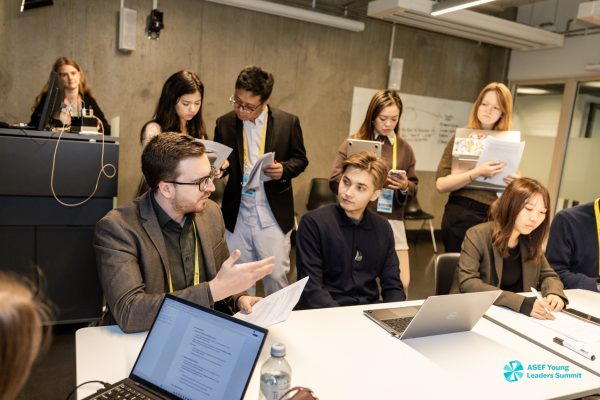
From June 9 to July 30, the online phase brought together the entire cohort in two weekly live sessions, complemented by study groups and discussion forums. Over eight weeks, we worked with trainers and speakers from diverse fields (academia, the third sector, international organisations and the private sector) on the programme’s pillars: anticipatory mindset, horizon scanning, systems thinking, strategic foresight, and the ethical uses of emerging technologies and AI applied to shaping the future.
Beyond the theoretical content, what makes this phase unique is the constant exposure to very different analytical frameworks and realities. Each exchange in the study groups forces participants to rethink their own assumptions: how youth participation is approached in Southeast Asia, how climate challenges are addressed in Northern Europe, or how democratic innovation connects with local governance in contexts very different from our own. This decentring is, in itself, a learning experience.
Tromsø: representing Spain in the Arctic
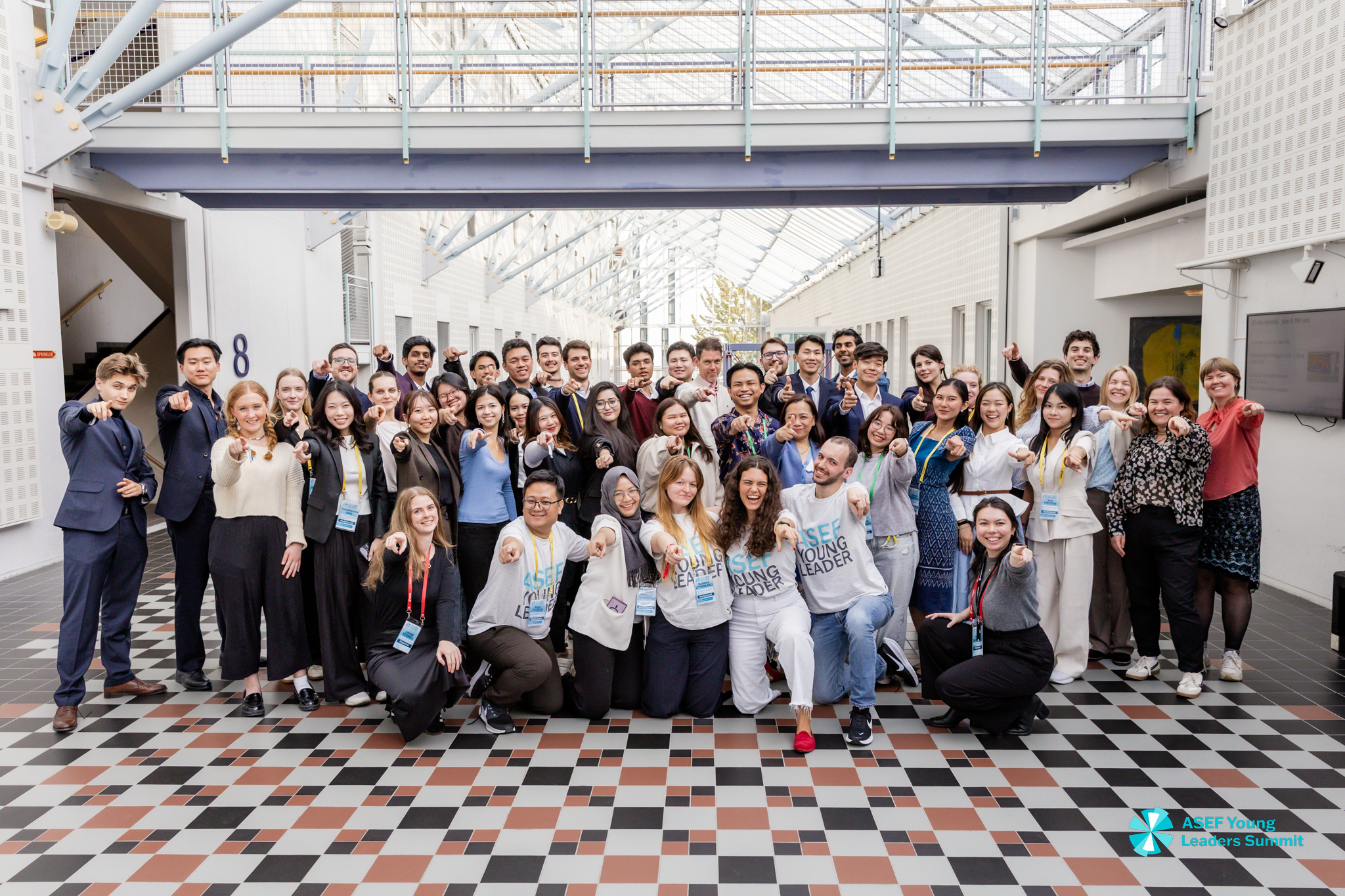
Based on their commitment and active participation in the online phase, ASEF selected 40 participants to attend the Asia-Europe Youth Leadership Training: Anticipatory Leadership in the Arctic, held from August 23 to 29, 2026, in Tromsø, Norway. Being selected to represent Spain in this in-person phase has undoubtedly been one of the year’s greatest achievements for me, both personally and professionally.
The setting is no coincidence. The training was organised in collaboration with the Arctic University of Tromsø (UiT) and the True North – Tromsø 2026 European Youth Capital initiative, in a unique context: the Arctic as a case study for thinking about anticipatory leadership. Few regions so tangibly concentrate the acceleration of climate change, emerging geopolitical tensions, economic transformation, and the relationship with Indigenous peoples and fragile territories. It is a living laboratory for the questions the programme invites us to ask.
For six days, we combined training sessions with experts, dialogues with local stakeholders, contextual learning and action-planning workshops. The Action Planning session, in particular, was a key moment for translating theory into concrete proposals for our home communities.
The heart of the programme: human connections
If I had to highlight just one element of this experience, it would undoubtedly be the people. In Tromsø, we shared a week of intensive living with young people from across the Asia-Europe region: from the Philippines, Indonesia, Vietnam, India, Japan, Malaysia and Cambodia to Portugal, Norway, Germany, Lithuania, Spain and Romania, among many other countries. This format fosters a type of connection that is difficult to build in other settings: we shared sessions, meals, walks, celebrations, as well as doubts and projects.
Many of the most fruitful conversations took place with colleagues from the Philippines, with whom we identified clear affinities regarding youth participation, democratic innovation at the local level, and the role of young citizens in community governance. From these dialogues, ideas have begun to emerge for the joint development of future proposals and projects: methodological exchanges, cross-presentations, and the exploration of collaborations that broaden the Asia-Europe framework towards shared and mutually beneficial work.
For Coglobal, this programme has opened concrete doors to collaborations with Asian organisations that have powerful initiatives and stimulating visions in the areas of democratic participation and innovation. It is a new space for cooperation that would have been much more difficult to imagine without ASEFYLS.
From the Arctic to Granada: applying what we have learned
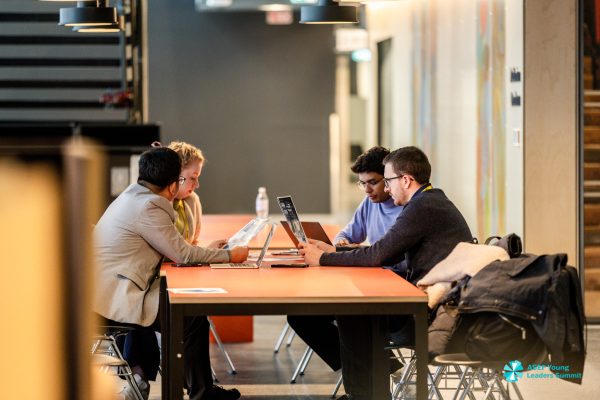
The action phase of the programme (from August to November 2026) asks each participant to organise a multiplier activity in their community. In my case, we will incorporate it into the Youth Deliberative Assembly of the Northern District of Granada, a participatory process that Coglobal is developing within the framework of the Distrito Norte Delibera project, co-financed by the Erasmus+ programme of the European Union and aimed at teenagers aged 13 to 18 from a district classified as a Disadvantaged Area by the Andalusian ERACIS strategy.
In one of the assembly sessions, we will integrate three anticipatory thinking tools developed at ASEFYLS, adapted to the language and reality of adolescents in a context of vulnerability:
- Signal scanning: detecting early signs of change in the environment. Participating adolescents will identify trends that are already transforming their neighbourhood (employment, digitalisation, climate change and migration) and that rarely appear in everyday discussions.
- Futures Wheels: mapping the chain of consequences that result from a change or decision. Participants will visualise the direct and indirect effects that a phenomenon would have on their lives, their families and their communities, thus developing a systemic perspective.
- Backcasting: planning backwards from a desired future. Starting from the Northern District they want to inhabit in the future, they will define what decisions would have to be made today (by local administrations, the educational community and young people themselves) to get there.
These exercises are not an end in themselves: they feed into the subsequent deliberative sessions of the assembly, in which the district’s young people will formulate concrete proposals on youth opportunities and public spaces to present to local authorities. It is a very concrete example of how learning acquired within an Asia-Europe cooperation framework can directly impact the life of a neighbourhood in Granada.
A thank you and an invitation
I’d like to conclude with two thoughts. First, my sincere thanks to the Asia-Europe Foundation, the programme’s coordinating team and the partners in Tromsø for their meticulous attention to detail at every stage. And, most especially, to Casa Asia (whose Director General serves as Governor for Spain in ASEF) for giving visibility to the work of Spanish experts in these cooperation frameworks.
Secondly, an invitation: for those working in youth, democratic participation, international cooperation or any field connected to the shared challenges between Asia and Europe, closely following ASEF programmes and initiatives such as ASEFYLS is a genuine path to learning and networking. I leave the programme with a reinforced conviction: dialogues between young leaders from Asia and Europe are not a diplomatic luxury, but a practical necessity in the face of the challenges we share.
For more information about ASEF, please visit the website: www.asef.org